

Wolff-Parkinson-White (WPW) Syndrome is a rhythm disturbance that hides in plain sight—calm one minute, catastrophic the next. While it’s relatively rare, it carries the potential for lethal arrhythmias if misdiagnosed or mistreated. In the prehospital and emergency setting, knowing how to recognize WPW and avoid the classic pitfalls can literally be the difference between life and death.
This article reviews the basics of WPW, what to watch for on a 12-lead, what not to give, and why recording a rhythm strip during adenosine administration is one of the most critical habits in rhythm management.
What Is WPW?
WPW is caused by an accessory conduction pathway called the Bundle of Kent, which bypasses the AV node and allows electrical impulses to pass directly from the atria to the ventricles [1]. This results in pre-excitation of the ventricles and opens the door to reentrant tachycardias such as atrioventricular reentrant tachycardia (AVRT), and more dangerously, atrial fibrillation with rapid conduction through the accessory pathway [1].
Recognizing WPW on a 12-Lead ECG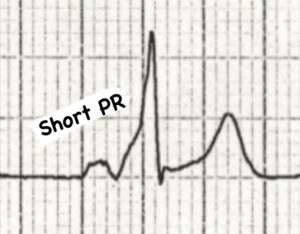
When in sinus rhythm, WPW has three tell-tale ECG signs:
-
Short PR interval (<120 ms)
-
Delta wave – a slurred upstroke at the beginning of the QRS
-
Wide QRS complex (>120 ms) [2]
These are most visible in leads V2–V5, where the delta wave is often most pronounced. Additional insight may come from leads I, aVL, II, III, and aVF depending on the location of the accessory pathway [3].
Keep in mind that pre-excitation can be intermittent, especially in younger patients or those between episodes of tachycardia [4].
WPW and SVT: Looks Can Be Deceiving
In WPW, orthodromic AVRT is a common presentation—a narrow-complex SVT that can look identical to typical AVNRT [1]. It often responds to vagal maneuvers or adenosine, which may lead to a false sense of security. However, the danger arises when these patients convert into atrial fibrillation—which can quickly become unstable [5].
Afib with WPW: The Pre-Code Rhythm
Atrial fibrillation in a patient with WPW is a ticking time bomb. Without the AV node to filter impulses, electrical activity races unregulated through the accessory pathway [5]. This may lead to:
-
Irregularly irregular rhythm
-
Very rapid ventricular response (often >250 bpm)
-
Wide QRS complexes that mimic VT or appear bizarre
The risk of sudden deterioration into ventricular fibrillation is high in this setting [5].
Avoid This Mistake: AV Nodal Blockers
A fatal pitfall occurs when AV nodal blockers are given to a patient with WPW in atrial fibrillation or an unknown wide-complex tachycardia. These include:
-
Calcium channel blockers (diltiazem, verapamil)
-
Beta-blockers
-
Digoxin
-
Adenosine (in certain cases) [6]
These medications slow conduction through the AV node, which leaves the accessory pathway wide open—and that can trigger a sudden and lethal deterioration into VF [6].
If You Gave the Wrong Drug—Now What?
If you’ve inadvertently given a calcium channel blocker or AV nodal blocker to a patient later found to have WPW:
-
Support perfusion with IV fluids and vasopressors
-
Administer IV calcium (gluconate or chloride) to reverse hypotension from calcium channel blockers
-
Prepare for synchronized cardioversion
-
Avoid further AV nodal blockers
-
Consider procainamide for rhythm control if the patient is stable and the drug is available [6]
The Adenosine Pause: Record. The. Strip.
This is the most important part of this article.
Whenever you give adenosine, you are inducing a temporary AV block. That block often gives you a few seconds where:
-
Atrial flutter or fibrillation becomes unmasked
-
Delta waves or accessory pathways may briefly appear
-
You can see what’s really happening underneath the rate [7]
But none of that matters if you’re not recording a strip.
Always record a rhythm strip when administering adenosine—before, during, and after. This is your only chance to catch the truth behind the rhythm [7].
Failing to do so may leave you blind to a potentially lethal diagnosis. Let this be the hill we’re all willing to die on as clinicians: Record the strip.
What Should You Use for WPW + Afib?
For unstable patients:
-
Immediate synchronized cardioversion is the gold standard
For stable patients:
-
IV procainamide (slow infusion)
-
Ibutilide (if available and you’re experienced with its use)
-
Avoid all AV nodal blockers in these patients [6]
Key Takeaways
-
Suspect WPW in young patients with syncope, palpitations, or fast irregular rhythms.
-
Look for short PR, delta wave, and wide QRS—especially in leads V2–V5.
-
If you see a wide, irregular rhythm, never give AV nodal blockers.
-
Always record a rhythm strip during adenosine—you’ll never forgive yourself if you don’t [7].
-
In WPW + Afib: Procainamide or cardioversion, not AV blockers.
Final Word
WPW is a silent threat. It can masquerade as benign SVT or mimic atrial fibrillation—but treat it incorrectly, and your patient could crash fast. The ECG is your best friend, and your rhythm strip is your only witness when adenosine is on board.
This isn’t about being perfect—it’s about being prepared. Make rhythm strip documentation your standard. And when in doubt, trust the basics: if it’s wide, irregular, and fast—don’t block the AV node.
References
-
Sirens to Scrubs: Wolff-Parkinson-White Syndrome. CanadiEM. Retrieved from https://canadiem.org/sirens-to-scrubs-wolff-parkinson-white-syndrome
-
Life in the Fast Lane ECG Library – Pre-excitation Syndromes.
-
Marriott’s Practical Electrocardiography, 13th Edition.
-
Braunwald’s Heart Disease: A Textbook of Cardiovascular Medicine, 11th Edition.
-
UpToDate – Management of arrhythmias in patients with WPW syndrome.
-
ACLS Provider Manual, American Heart Association, 2020.
-
Amal Mattu, MD – Adenosine and the Unmasking of WPW (ECG Cases and Commentary).


Very good https://is.gd/N1ikS2
Very good https://is.gd/N1ikS2
Good https://is.gd/N1ikS2
Good https://is.gd/N1ikS2
Very good https://is.gd/N1ikS2
Awesome https://is.gd/N1ikS2
Awesome https://is.gd/N1ikS2
Awesome https://is.gd/N1ikS2
Very good https://is.gd/N1ikS2
Awesome https://is.gd/N1ikS2
Good https://is.gd/N1ikS2
Awesome https://is.gd/N1ikS2
Good https://is.gd/N1ikS2
Good https://is.gd/N1ikS2
Awesome https://is.gd/N1ikS2
Awesome https://is.gd/N1ikS2
Good https://is.gd/N1ikS2
Good https://is.gd/N1ikS2
Good https://is.gd/N1ikS2
Very good https://is.gd/N1ikS2
Very good https://is.gd/N1ikS2
Awesome https://is.gd/N1ikS2
A person essentially assist to make significantly articles I’d state.
That is the first time I frequented your website page and thus far?
I amazed with the research you made to create this particular submit incredible.
Excellent process!