There’s a version of the story we keep telling in healthcare.
“The doctor saved the patient.”
It’s neat.
It’s structured.
It fits into headlines and handovers.
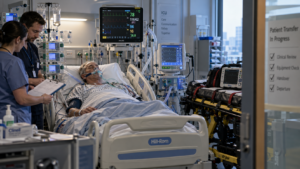
But if you’ve ever stood inside an ICU long enough… really stood there… not just passed through it… you start to feel the cracks in that narrative.
Because the truth isn’t a single decision.
It’s a continuous presence.
And that presence doesn’t wear a white coat.
The Reality Behind the Curtain
Physicians in the ICU carry the weight of multiple lives at once. They synthesize data, interpret diagnostics, and make decisions that shape the trajectory of care.
But they move.
They move between rooms.
Between patients.
Between priorities.
And while they’re doing that…
Someone stays.
The ICU nurse.
The respiratory therapist.
The paramedic working within or alongside critical care teams.
They don’t rotate through the patient.
They anchor to them.
They see the first breath after sedation is reduced.
They feel the resistance in a BVM before the ventilator alarms.
They notice when a patient stops interacting with the world… even if the numbers haven’t changed yet.
And that’s the difference.
Because critical illness doesn’t collapse all at once.
It leaks.
Deterioration Is a Process… Not an Event
We like to think of ICU deterioration as dramatic — alarms, arrests, chaos.
But most of the time, it begins quietly.
A fractionally rising lactate.
A waveform that loses its crispness.
A patient who becomes just slightly more restless, slightly more withdrawn.
Nothing that triggers an immediate response.
But everything that should.
The literature is clear — early recognition of deterioration, often driven by bedside clinicians, significantly reduces ICU mortality and cardiac arrest rates [1][2].
But here’s the uncomfortable truth:
Machines don’t recognize deterioration.
People do.
And not just any people — people who have been present long enough to understand what normal looks like for that patient, in that moment.
The Unseen Skill: Pattern Recognition Under Pressure
We often call it “intuition.”
But that word does a disservice to what’s actually happening.
This is high-level clinical cognition.
Years of experience compressed into seconds.
Micro-patterns being processed without conscious effort.
A feeling that something is wrong… before there’s proof.
The ICU nurse who says, “I don’t like this.”
The respiratory therapist who adjusts settings before the ABG worsens.
The paramedic who recognizes compensated shock before the numbers fall apart.
This is recognition-primed decision-making — a well-documented cognitive process where experts act based on pattern familiarity rather than stepwise analysis [3].
And when these voices are heard… patients survive.
When they’re ignored… things unravel.
Now Let’s Talk About What Happens When They’re Gone
Because this is the part we don’t like to confront.
We talk about staffing shortages like they’re logistical problems.
They’re not.
They’re clinical threats.
1. The Loss of Continuity
When experienced ICU staff leave, continuity disappears.
Patients are no longer known.
They are reviewed.
And there’s a difference.
A new clinician can read a chart.
They can review trends.
They can interpret numbers.
But they can’t feel what changed.
They don’t know what that patient looked like six hours ago… or yesterday… or last week.
And without that continuity, deterioration becomes something we react to — instead of something we prevent.
2. The Delay in Recognition
Less experienced staff rely more heavily on objective data.
They wait for:
- The blood pressure to drop
- The saturation to fall
- The lab values to confirm
But by the time those things happen…
You’re already behind.
Early intervention windows close quickly in critical care. And delayed recognition is consistently associated with worse outcomes, including increased ICU mortality and longer length of stay [2][4].
3. The Cognitive Load on Everyone Else
When you lose experienced ICU staff, the pressure doesn’t disappear.
It shifts.
Remaining nurses take on more patients.
Respiratory therapists cover more ventilators.
Physicians are pulled back to the bedside more frequently to compensate for reduced frontline detection.
The system becomes reactive instead of proactive.
And cognitive overload sets in.
And when cognitive overload sets in…
Mistakes follow.
4. The Breakdown of Team Dynamics
High-functioning ICUs don’t just rely on individuals.
They rely on relationships.
Unspoken communication.
Trust built over time.
The ability to challenge each other without hesitation.
When experienced staff leave, that fabric tears.
New teams take time to form.
Communication becomes cautious.
Escalation becomes delayed.
And in the ICU… hesitation costs time.
And time costs outcomes.
Strong interdisciplinary communication has been directly linked to improved patient safety and reduced mortality in critical care environments [4].
But communication only works when people feel confident in each other.
That takes time.
And time is exactly what critically ill patients don’t have.
5. The Emotional Toll No One Measures Properly
There’s another layer to this.
One we rarely quantify.
The emotional weight carried by ICU staff.
They don’t just treat patients.
They absorb stories.
They sit with families.
They carry deaths home in silence.
When experienced staff leave, it’s often not because they want to.
It’s because they’re exhausted.
Burnout among ICU clinicians is not just a personal issue — it directly impacts patient safety, staff retention, and institutional stability [6].
And when burnout spreads…
It doesn’t remove one person.
It creates a cascade.
The Knock-On Effect Across the Hospital
This doesn’t stay contained within the ICU.
When ICU staffing weakens:
- Emergency departments slow down because ICU beds aren’t available
- Operating theatres cancel cases due to lack of post-op critical care capacity
- Interfacility transfers are delayed, impacting regional systems
- Hospital flow breaks down, increasing overall mortality risk
The ICU is not just a department.
It is the hospital’s pressure valve.
And the staff within it are what keep that valve functioning.
So What Are We Really Losing?
Not just staff.
We’re losing:
- Early recognition
- Clinical experience
- System stability
- Team cohesion
- Emotional resilience
We’re losing the ability to stay ahead of deterioration.
And once you lose that…
You’re no longer practicing critical care.
You’re chasing it.
This Is the Part We Need to Get Right
Support isn’t a buzzword.
It’s a strategy.
If we want to protect patients, we have to protect the people at the bedside.
That means:
- Safe staffing ratios
- Psychological support and recovery time
- Inclusion in decision-making
- Respect for clinical intuition
- Investment in retention, not just recruitment
Because replacing numbers is easy.
Replacing experience is not.
Final Thought
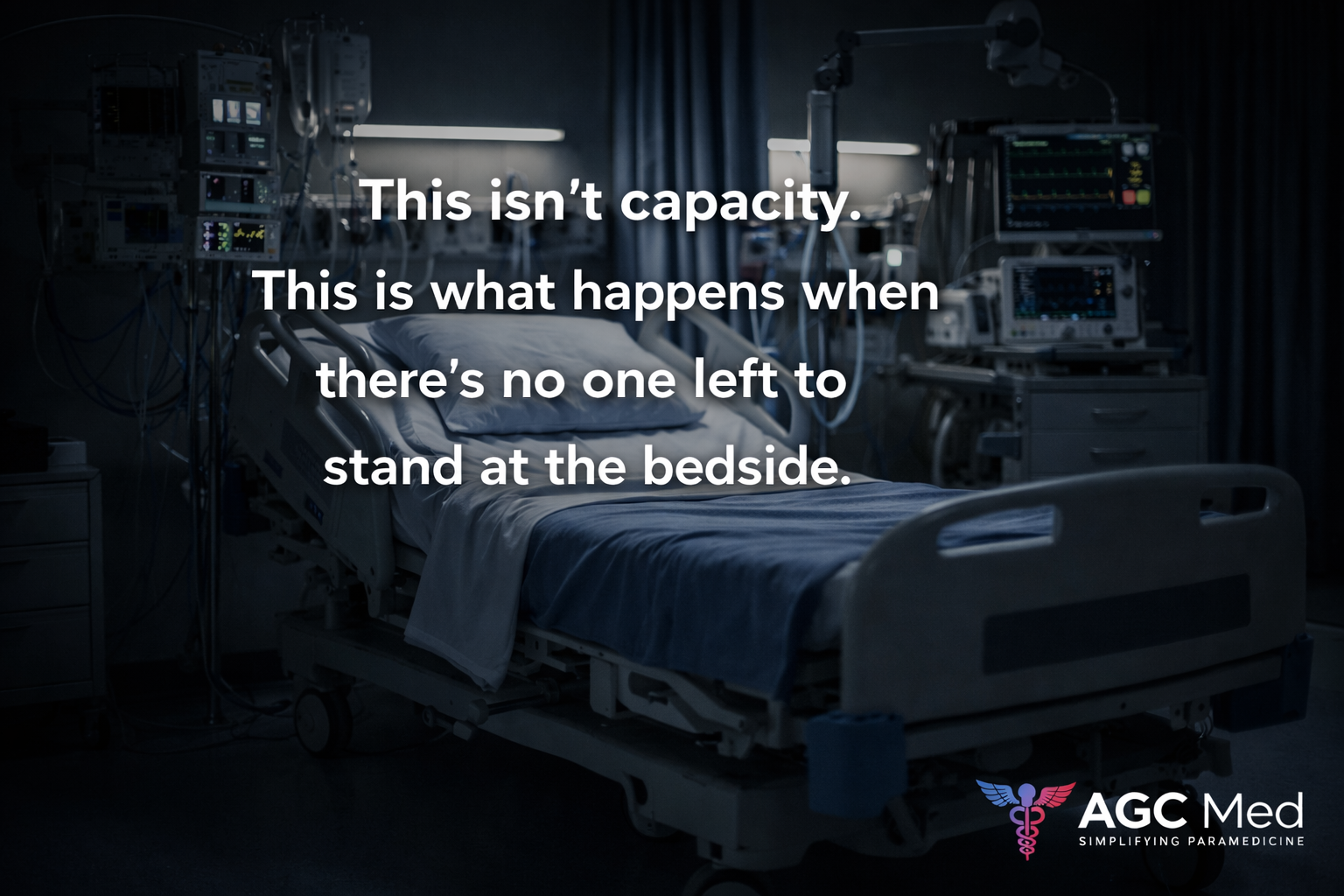
The ICU doesn’t fail suddenly.
It erodes.
Quietly. Gradually.
In ways that aren’t obvious until they are.
And by the time we notice…
It’s already affecting outcomes.
So today — and every day after — look beyond the obvious.
Because the people who save ICU patients…
Are often the ones no one is watching.
References
- Jones, D. et al. (2021). Rapid Response Systems and Early Recognition of Clinical Deterioration. Critical Care Medicine, 49(7), 1143–1153.
- Cardona-Morrell, M. et al. (2016). Effectiveness of early warning systems and monitoring in detecting deterioration. Intensive Care Medicine, 42(6), 856–867.
- Klein, G. (2017). Sources of Power: How People Make Decisions. MIT Press.
- Reader, T.W. et al. (2017). Interdisciplinary communication and patient safety in ICU settings. BMJ Quality & Safety, 26(3), 219–228.
- AACN (2022). Nurse staffing, work environment, and patient outcomes in critical care.
- Moss, M. et al. (2022). Burnout in critical care professionals and its impact on patient safety. American Journal of Respiratory and Critical Care Medicine, 205(5), 547–558.