Understanding the Physiology Behind the Protocol
One of the guiding philosophies at AGC Med is that clinicians should strive to understand why they perform an intervention rather than simply memorising what to do. Protocols and algorithms are essential—they standardise care, improve consistency, and reduce error—but they should never replace an understanding of the physiology that underpins them. The clinician who understands the mechanism behind a treatment is far better equipped to recognise when an intervention is appropriate, when it is not, and why it works in the first place.
Magnesium sulfate in Torsades de Pointes (TdP) is an excellent example.
Ask almost any healthcare professional how to treat TdP, and the answer is immediate: “Give magnesium.” Ask why, however, and the explanation is often less precise. Many clinicians will say that magnesium terminates the arrhythmia or that it works because the patient is magnesium deficient. While these explanations are common, they do not accurately describe magnesium’s principal electrophysiological role.¹
What Is Torsades de Pointes?
Torsades de Pointes is a unique form of polymorphic ventricular tachycardia that occurs in the presence of a prolonged QT interval. Unlike most ventricular tachyarrhythmias, TdP is considered a triggered arrhythmia rather than one caused primarily by re-entry.²
The prolonged QT interval reflects delayed ventricular repolarisation. This delay creates an electrically unstable environment in which early afterdepolarisations (EADs) can develop during Phase 2 or Phase 3 of the ventricular action potential. These abnormal depolarisations are capable of generating premature ventricular complexes (PVCs). If one of these PVCs occurs during a vulnerable period of repolarisation, it can initiate TdP.²
This is an important distinction because the arrhythmia is not simply occurring spontaneously—it requires a trigger.
Why Does Torsades Often Recur?
Many episodes of TdP are self-terminating. The rhythm may continue for only a few seconds before reverting spontaneously to sinus rhythm. Unfortunately, unless the underlying electrophysiological abnormality has been corrected, another EAD can develop moments later, producing another triggered beat and initiating another episode of TdP.³
Rather than viewing TdP as one sustained arrhythmia, it is often more accurate to think of it as a series of repeatedly initiated arrhythmias, each triggered by the same underlying mechanism. Because each episode is initiated by a new premature ventricular complex arising from unstable repolarisation, the morphology of the QRS complex can vary beat-to-beat. This is what produces the characteristic “twisting of the points” appearance—each PVC originates from a slightly different ventricular focus or conduction pathway, resulting in a constantly changing axis and morphology.³
So Why Do We Give Magnesium?
This is where understanding physiology changes clinical practice.
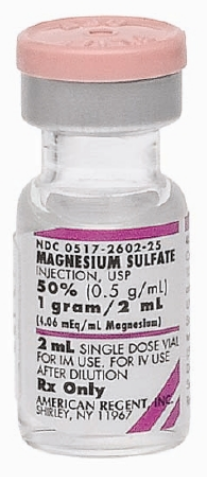
Magnesium sulfate is commonly described as “terminating TdP,” but this description oversimplifies its mechanism of action.
Current evidence suggests that magnesium’s principal benefit lies in its ability to suppress the cellular mechanisms responsible for generating early afterdepolarisations. Although its precise electrophysiological effects remain incompletely understood, magnesium appears to reduce calcium influx through L-type calcium channels and suppress calcium-dependent triggered activity within ventricular myocytes.¹⁻⁴
By reducing the likelihood of EAD formation, magnesium decreases the probability that another premature ventricular beat will occur and therefore reduces the likelihood that another episode of TdP will be initiated.¹⁻⁴
In other words, magnesium is not primarily treating the arrhythmia itself.
It is treating the mechanism responsible for producing the arrhythmia.
That distinction is subtle but clinically important.
Does Magnesium Terminate Torsades?
This question generates considerable discussion.
Clinically, an episode of TdP may cease shortly after magnesium is administered. However, this temporal association does not necessarily mean magnesium chemically cardioverted the arrhythmia.
A more physiologically accurate explanation is that magnesium suppresses the triggered activity responsible for recurrent initiation. If the next EAD never occurs, the next episode of TdP never begins.¹⁻⁴
This concept also explains two observations frequently seen in clinical practice:
- Magnesium may be effective even when serum magnesium concentrations are normal.¹
- Magnesium often exerts its beneficial effects without significantly shortening the QT interval.²
Neither observation would be expected if magnesium’s primary role were simply electrolyte replacement or QT correction.
What About the Unstable Patient?
Understanding magnesium’s mechanism should never delay definitive treatment.
Patients with haemodynamically unstable TdP or degeneration into ventricular fibrillation require immediate unsynchronised defibrillation. Electrical therapy remains the treatment of choice for an unstable patient.²,⁵
Following stabilisation, management should focus on eliminating the factors responsible for prolonging ventricular repolarisation. These include correcting hypokalaemia, discontinuing QT-prolonging medications, correcting electrolyte abnormalities where present, treating bradycardia or pause-dependent TdP, and considering overdrive pacing or pharmacological chronotropic support in appropriate patients.²,⁵
Magnesium is therefore one component of a broader strategy aimed at preventing recurrence rather than functioning as an isolated antiarrhythmic therapy.
The AGC Med Perspective
Medicine is full of treatments that become reduced to simple associations.
Cardiac arrest equals adrenaline.
Anaphylaxis equals epinephrine.
Torsades equals magnesium.
These associations are useful for recall, but they can also create the illusion that we understand a treatment when, in reality, we have only memorised an algorithm.
At AGC Med, we believe clinicians should challenge themselves to ask one additional question:
Why?
Understanding the physiology behind an intervention transforms protocols from lists of instructions into logical clinical decision-making tools. It allows clinicians to adapt when patients present atypically, to recognise when an algorithm reaches its limitations, and ultimately to provide better care.
Protocols teach us what to do.
Physiology teaches us why.
The clinician who understands both is the clinician who will make the best decisions when it matters most.
References
1. Tzivoni D, Banai S, Schuger C, et al. Treatment of torsade de pointes with magnesium sulfate. Circulation. 1988;77(2):392-397.
2. Drew BJ, Ackerman MJ, Funk M, et al. Prevention of Torsade de Pointes in Hospital Settings: A Scientific Statement From the American Heart Association and the American College of Cardiology Foundation. Circulation. 2010;121:1047-1060.
3. Roden DM. Long-QT Syndrome. New England Journal of Medicine. 2008;358:169-176.
4. El-Sherif N, Turitto G. Torsade de Pointes. Current Problems in Cardiology. 2003;28(9):517-593.
5. European Resuscitation Council Guidelines for Resuscitation 2021: Adult Advanced Life Support. Resuscitation. 2021.